
How to Choose the Best Online School in 2026: What Every Parent Should Know About Bullying, Confidence and Learning
In This Article
- ARTICLE
- June 19, 2026
- 2:32 pm
As admissions for the 2026–27 academic year open across the UK, many parents find themselves facing an important question:
How do I choose the best online school for my child?
The challenge is that almost every school appears to offer the same promises. Small class sizes. Excellent teachers. Strong GCSE results. Personalised learning. Pastoral care.
For parents researching online education for the first time, knowing where to begin can feel overwhelming.
At the same time, more families than ever before are considering homeschooling and online schools as an alternative to traditional education. Some are looking for greater flexibility. Others want a stronger Islamic environment. Many are searching for a school that better understands their child’s individual needs.
Learn more about how Asra Hub delivers structured learning through its Online School UK curriculum and programmes.
For a growing number of families, however, the decision is driven by something much deeper.
They are looking for a fresh start after a difficult experience with bullying.
Why More Parents Are Choosing Online Schools
Every family’s homeschooling journey is different.
Some parents have ideological reasons for educating their children at home. Others may be concerned about the quality of local schools, negative peer influences, or the lack of support available for children with additional needs.
Today, online education offers far more choice than ever before. Parents can access experienced teachers, structured learning programmes, GCSE pathways, and specialist support without being restricted by geography.
For Muslim families, the growth of online Islamic schools has created new opportunities to combine academic achievement with Islamic values, character development, and a nurturing learning environment.
But for many parents, one concern rises above all others.
“Will my child feel safe, valued and confident again?”
Bullying Is Not “Just Part of Growing Up”
Bullying remains one of the most serious challenges facing children today.
According to the Office for National Statistics, an estimated 1.54 million children aged 10 to 15 experienced in-person bullying during the year ending March 2023. This represented approximately 34.9% of children in that age group. (Office for National Statistics)
Behind every statistic is a child whose confidence, happiness and sense of security may have been affected.
For many years, bullying was sometimes dismissed as something children would simply “grow out of.” Research now tells a very different story.
A major review published in Social Science & Medicine concluded that bullying in childhood can have lasting effects on mental health and wellbeing. Researchers found links between bullying and low self-esteem, self-harm, academic difficulties and longer-term psychological challenges that may continue long after the bullying itself has ended. (PMC)
The authors noted:
“There is little doubt today that being bullied in childhood is an adverse experience that casts a shadow on children’s and adolescents’ mental health and wellbeing.”
A separate study from The University of Manchester found that bullying has a substantial negative impact on teenage mental health, particularly among boys, while highlighting the need for stronger prevention and support strategies. (The University of Manchester)
For parents who have watched their child become withdrawn, anxious, reluctant to attend school, or lose confidence in themselves, these findings are not surprising.
They have lived it.
When Learning Stops Feeling Safe
One of the most damaging effects of bullying is that it often changes how children feel about learning itself.
A child who once enjoyed lessons may become fearful of participation.
A child who previously asked questions confidently may become silent.
A child with strong academic potential may begin underperforming because so much emotional energy is spent simply trying to get through the day.
In these situations, academic recovery and emotional recovery often need to happen together.
That is why choosing the right educational environment matters so much.
How Asra Hub Supports Children Who Have Experienced Bullying
Over the years, Asra Hub has welcomed many students who joined us following difficult experiences in previous schools.
Some arrived with very low confidence.
Some had lost trust in education altogether.
Others simply needed time, patience and understanding before they felt ready to engage again.
Our experienced teachers and pastoral teams understand that rebuilding confidence cannot be rushed.
It starts by listening.
Step 1: Understanding the Child
Our admissions process begins with a confidential conversation between parents and our trained specialists.
We take time to understand the child’s educational background, emotional wellbeing, previous experiences, strengths, challenges and individual needs.
Every child is different, which means every support plan must be different too.
Step 2: Creating a Personalised Support Plan
Working together with parents, we create a structured plan focused on helping the child settle successfully into online learning.
The first priority is often not grades.
The first priority is helping the child feel comfortable, secure and confident again.
Through carefully designed observation criteria and digital learning indicators, we monitor how students engage with lessons, teachers and learning activities.
Step 3: Building Confidence Through Relationships
At Asra Hub, student-teacher relationships are at the heart of everything we do.
Teachers work patiently to create opportunities for students to participate at their own pace.
As trust develops, many students begin asking questions again, contributing to discussions and gradually rediscovering confidence in their abilities.
For children who have experienced bullying, these small steps can represent major milestones.
Step 4: Ongoing Parent Partnership
Support does not stop after enrolment.
Our pastoral team regularly reviews progress with parents and evaluates whether any adjustments are required.
Parent-teacher meetings provide further opportunities to discuss progress, celebrate successes and identify areas where additional support may help.
This collaborative approach ensures that school and family remain aligned throughout the child’s journey.
Step 5: Evidence-Based Progress Monitoring
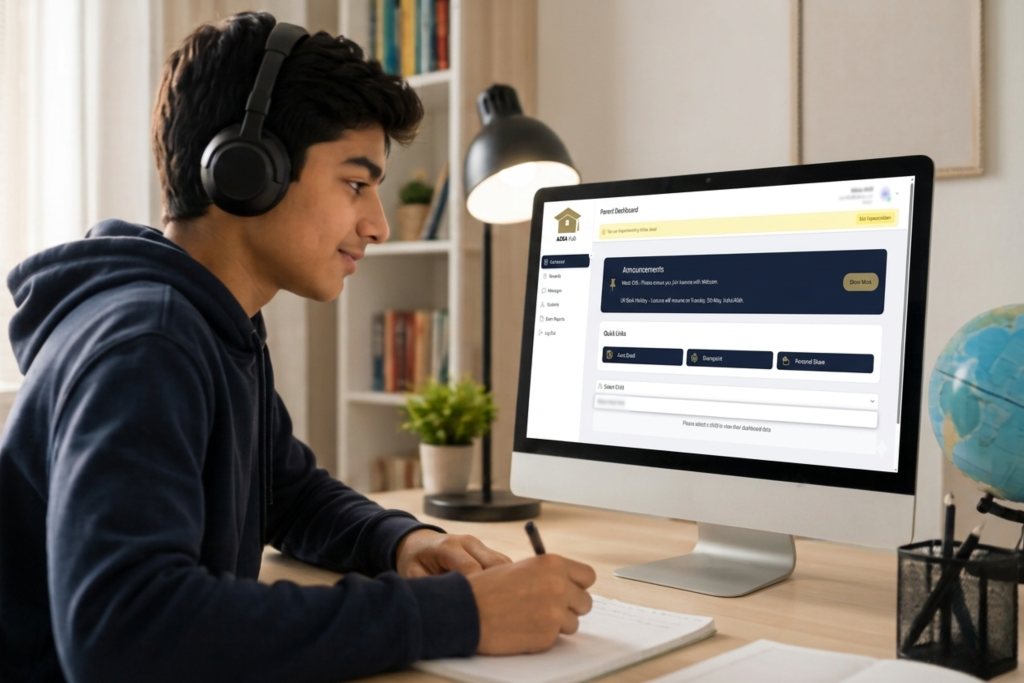
Our advanced learning and behaviour monitoring systems provide teachers and parents with a clear picture of student development across different subjects and activities.
This allows families to see not only academic progress but also growing participation, engagement and confidence over time.
For many parents, seeing those improvements is one of the most rewarding parts of the journey.
A Parent's Experience
One parent shared the following reflection:
“I have never seen teachers so committed, so joyful, so interactive! They help each student to reach their full academic and personal potentials. The teachers have such a beautiful way of engaging the children, that they have brought out the best in Zain both personally and academically.
These teachers have made Zain love learning and he values knowledge in a way that I never thought could be possible at his age. Zain has never missed a single lesson because he wants to be there, he wants to learn.
Moreover, I have observed a huge improvement in Zain’s confidence in his own abilities, his self-esteem, his communication skills and in all of his social interactions since joining this wonderful school. Alhamdulillah.”
Stories like this remind us that education is about much more than examination results.
It is about helping children believe in themselves again.
10 Questions to Ask Before Choosing an Online School in 2026
If you are currently comparing online schools, consider asking the following questions:
1. How long has the school been established?
A proven track record often provides reassurance and stability.
2. Are the teachers UK-qualified and experienced?
Teaching quality remains one of the biggest factors influencing student success.
3. How will the school support my child’s individual learning needs?
Every child learns differently.
4. How are parents kept informed about progress?
Regular communication helps parents stay involved in their child’s education.
5. How does the school monitor progress?
Look for systems that track both academic and personal development.
6. How is screen time balanced with offline activities?
Healthy learning includes both digital and non-digital experiences.
7. How are assignments, assessments and exams managed?
Understanding the school’s assessment process is important.
8. What GCSE results does the school achieve?
Results matter, but they should be viewed alongside the support provided to students.
9. What enrichment opportunities are available?
Clubs, competitions, projects and wider activities help children develop beyond the classroom.
10. What makes the school’s Islamic ethos unique?
A strong Islamic environment should influence character, values and daily interactions, not simply appear on a prospectus.
Looking Ahead to 2026–27
Online schools play an increasingly important role in supporting homeschooling families by providing structured learning, qualified teachers and a supportive educational environment.
For children who have experienced bullying, choosing the right school can be even more important.
Recovery takes time.
Confidence takes time.
Trust takes time.
The most effective approach is one where parents and school work together with a shared goal: helping the child feel safe, capable and excited about learning once again.
At Asra Hub, we are proud to have supported many families through that journey.
As admissions open for the 2026–27 academic year, we invite parents to have a conversation with our team and discover whether Asra Hub could be the right next step for their child.
Admissions for 2026–27 Are Now Open
If you are considering an online Islamic school for the new academic year, our admissions team would be happy to discuss your child’s needs, answer your questions and explain how our personalised support approach works.
Every child’s story is different. Sometimes all they need is the right environment to start writing a new chapter.
Frequently Asked Questions
Yes. For many children, online schooling provides a safe and structured environment where they can focus on learning without the daily pressures that may have contributed to their previous negative experiences.
However, changing schools alone is not always enough. Children who have experienced bullying often need patience, understanding, and a carefully planned approach that helps rebuild confidence over time. The most successful outcomes usually come when parents and school work together to support both academic progress and emotional wellbeing.
Every child is different. Some students begin to show positive changes within a few weeks, while others may need several months before they feel comfortable participating fully in lessons and activities.
The focus should not be on speed but on steady progress. Small achievements such as asking a question in class, contributing to a discussion, or completing work with greater independence are often important signs that confidence is returning.
Many parents find that online learning can be particularly helpful for children who feel anxious in traditional school settings.
Learning from home removes many of the social pressures that can affect confidence and concentration. At the same time, a good online school should provide opportunities for interaction, communication and relationship building so that students continue developing important social and communication skills.
How are parents kept informed about their child’s progress?
Parents receive regular updates through our communication systems, parent-teacher meetings and progress reviews.
In addition to academic performance, we also monitor engagement, participation and confidence-building indicators. This allows parents and teachers to work together and celebrate improvements as they happen.
Yes. Social development is about much more than being physically present in a classroom.
Through live lessons, group discussions, collaborative activities, clubs and regular interaction with teachers and classmates, students continue developing communication, teamwork and interpersonal skills in a supportive environment.
For children who have experienced bullying, these opportunities can often feel safer and more manageable than traditional school settings.
Parents should look beyond marketing claims and ask practical questions about teaching quality, pastoral support, communication with parents, examination arrangements, safeguarding procedures, student outcomes and the school’s experience in supporting children with different needs.
If your child has experienced bullying, it is also important to ask how the school helps students rebuild confidence and what systems are in place to support emotional wellbeing.
Applications are now open for the 2026–27 academic year.
Families are encouraged to begin the admissions process early, particularly if they would like time to discuss their child’s needs, attend information sessions and prepare a personalised transition plan before the start of the new school year.