
INternational Admission
How Do GCSE and IGCSE Exams Work for Students Studying Online Abroad?
- November 6, 2026
- 7:28 am
One of the first questions parents ask about online secondary education is simple: if my child studies online, where do they actually sit their GCSE or IGCSE exams?
The answer depends on the qualification, subject, exam board and where the family lives. Online learning does not automatically mean examinations are taken online. Families should separate two decisions: where the child studies and where the formal examination entry and sitting will take place.
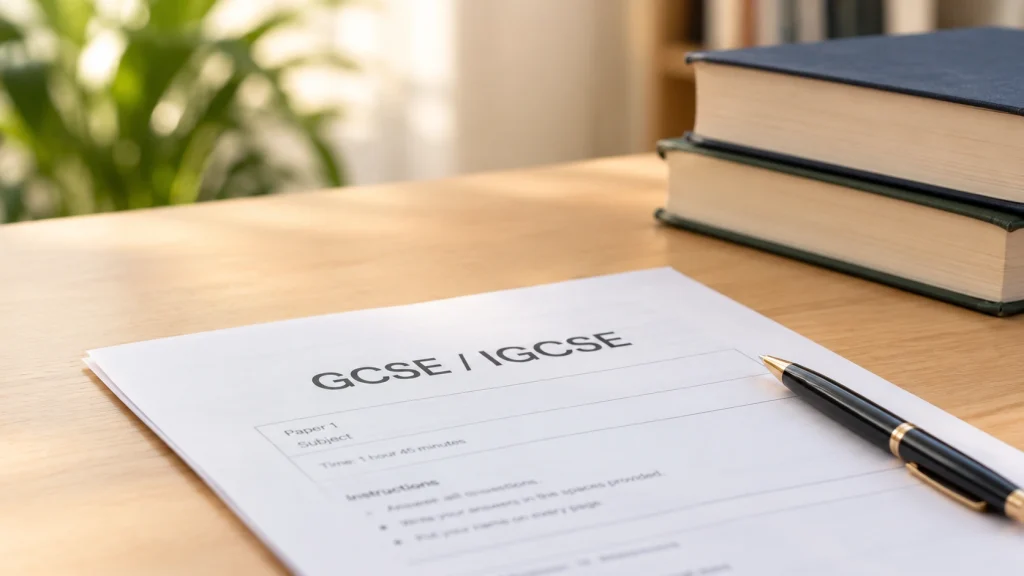
What is a private candidate?
Exam boards use the term “private candidate” for learners who are entered for an examination through a centre they do not normally attend. This can include home-educated students and learners studying through distance or online providers.
Cambridge International states that students studying with a Cambridge International school registered as online may enter exams as private candidates when they are not sitting through the online school’s own approved exam venue. Pearson likewise explains that private candidates can include home-schooled learners and students taught by a provider that does not host the examination itself.
The family normally needs an approved exam centre
For Cambridge International examinations, private candidates need to find a centre or approved Cambridge exam provider that accepts private candidates and arrange entry with that centre. Cambridge publishes guidance and centre-finding information for this purpose.
Pearson also provides centre-search information for learners outside the UK and advises private candidates to arrange entry with a centre willing to accept them. A centre is not automatically required to accept private candidates, so families should make contact early.
Not every subject has identical arrangements
Parents should check the exact specification before choosing subjects or booking a centre. Some qualifications include coursework, practical work, speaking components or other non-exam assessment. These can affect whether and how a private candidate can complete the qualification.
Cambridge’s current private-candidate guidance specifically notes that some syllabuses or options, including certain coursework routes, are not available to private candidates. Pearson similarly advises learners to understand how required non-exam assessments will be completed before committing to a distance-learning course.
Start planning earlier than you think
Do not wait until the examination month to look for a centre. Availability, entry deadlines, fees and subject options can differ between centres. An early conversation gives parents time to confirm the board, specification, subject code and assessment requirements.
For a family that may relocate, it is also worth checking exam-centre options in the likely destination before finalising subject choices.
What should you ask an online school?
Before enrolling an exam-age student, ask the school which qualifications it teaches, how it prepares students for the relevant specification, and what guidance it can provide about examination arrangements. Parents should still confirm final entry requirements directly with the relevant examination centre and exam board.
Most Recent Articles
A practical parent checklist
- Confirm the exam board and exact qualification/specification for each subject.
- Check whether the subject is available to private candidates and whether it includes coursework, practical or speaking requirements.
- Find an approved or recognised centre that accepts private candidates in your country or region.
- Ask the centre about entry deadlines, identification requirements, fees and any additional administration charges.
- Confirm the examination series and timetable before making travel plans.
- Keep written confirmation of entries and check the statement of entry carefully when it is issued.
What should you ask an online school?
Before enrolling an exam-age student, ask the school which qualifications it teaches, how it prepares students for the relevant specification, and what guidance it can provide about examination arrangements. Parents should still confirm final entry requirements directly with the relevant examination centre and exam board.
Planning IGCSE study from outside the UK
Explore ASRA Hub’s Key Stage 4 / IGCSE programme and speak to Admissions about your child’s subjects, location and intended examination year.
Official guidance to check before booking
- Cambridge International: Private candidates and approved exam-centre guidance.
- Pearson Edexcel: Private candidate guidance and international centre search.
- The chosen subject specification/syllabus for the examination series your child will take.